The graphic score project is an initiative of Mansoor Hosseini, with whom I worked on a Poetisk Podcast production to texts by Shadi Bazeghi a few years ago.
poetiskpodcast.dk/produktioner/flowmatic/mansoor-hosseini-interview

With some inspiration from @charakterziffer, here’s a little “zine” that I made covering eight of our recent ‘poetic podcasts’.
poetiskpodcast.dk/produktioner
Here’s another ‘poetic podcast’ (in Danish) that I recently contributed to: Sebastian Bune’s KALDER PRÆKARIATET. A stream of spoken word around the struggles to master everyday life as head of a social institution when you yourself grew up in a concrete jungle between relative poverty and dreams that stretched beyond that immediate circle.
poetiskpodcast.dk/produktioner/sten-paa-sten/sebastian-bune-kalder-praekariatet
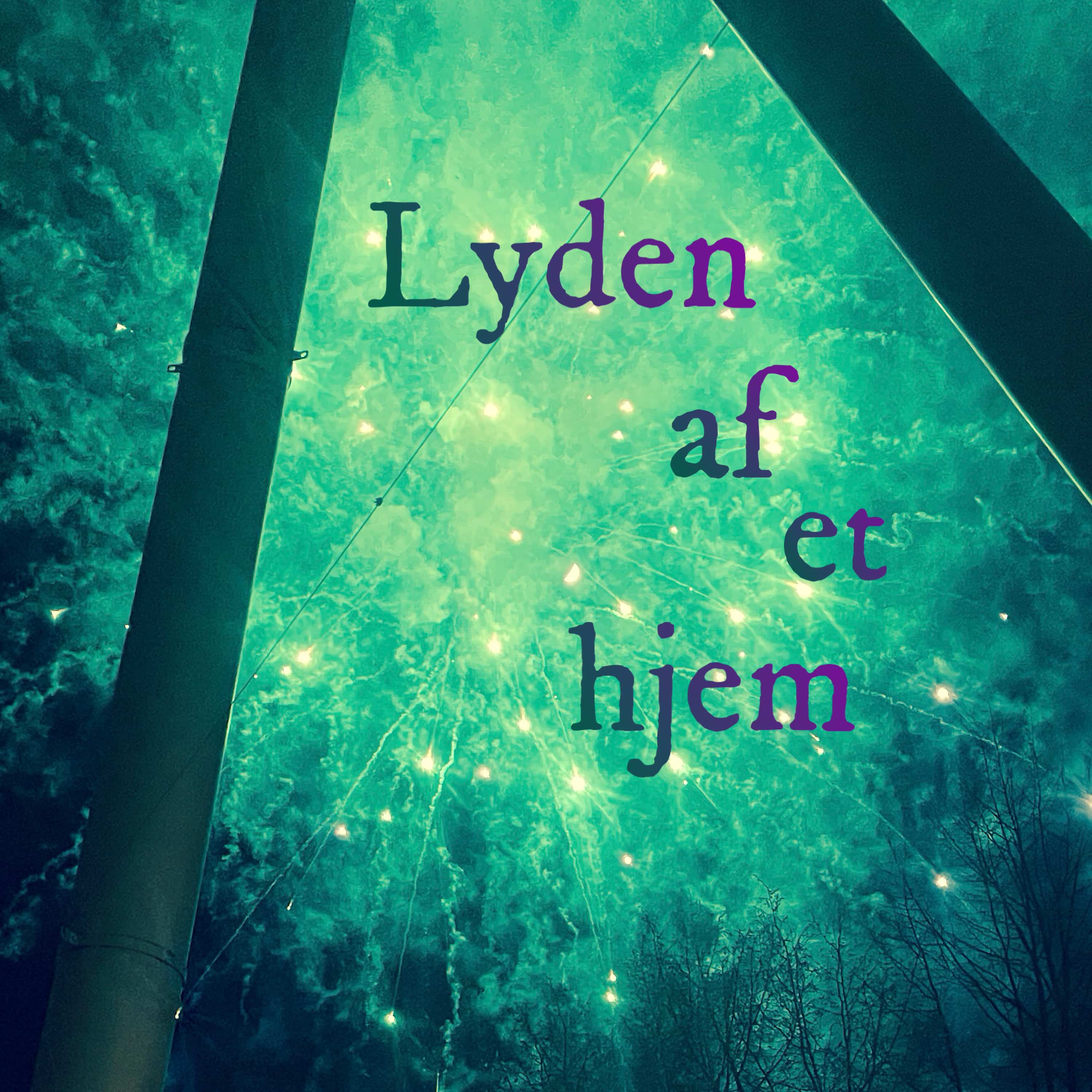
Here’s a ‘poetic podcast’ (in Danish) that I recently worked on with Cindy Lynn Brown: Lyden af et hjem (The Sound of a Home).
A cycle of 19 poems dealing with core human activities: our bodies, our relationships, our work, the societies we share.
The communities we humans are constantly involved in – not only with each other but also with animals, with objects, with algorithms and companies. How do they affect our world, our well-being?
poetiskpodcast.dk/produktioner/sten-paa-sten/lyden-af-et-hjem
“Could the concept of money be thought anew in more sustainable ways?” Here’s a very interesting episode of the Eco Thoughts podcast in which Ester Barinaga presents ideas and case studies from her book “Remaking Money for a Sustainable Future”:
Transformative Talks 1: Ester Barinaga
I recently discovered Eco Thoughts, a podcast by the Center for Applied Ecological Thinking at the University of Copenhagen. Episodes 4 and 5 with Judith Butler on the topic of climate sorrow, and in episode 1, Jane Bennett recounting Thoreau in the “Energetics of eco-enchantment”.
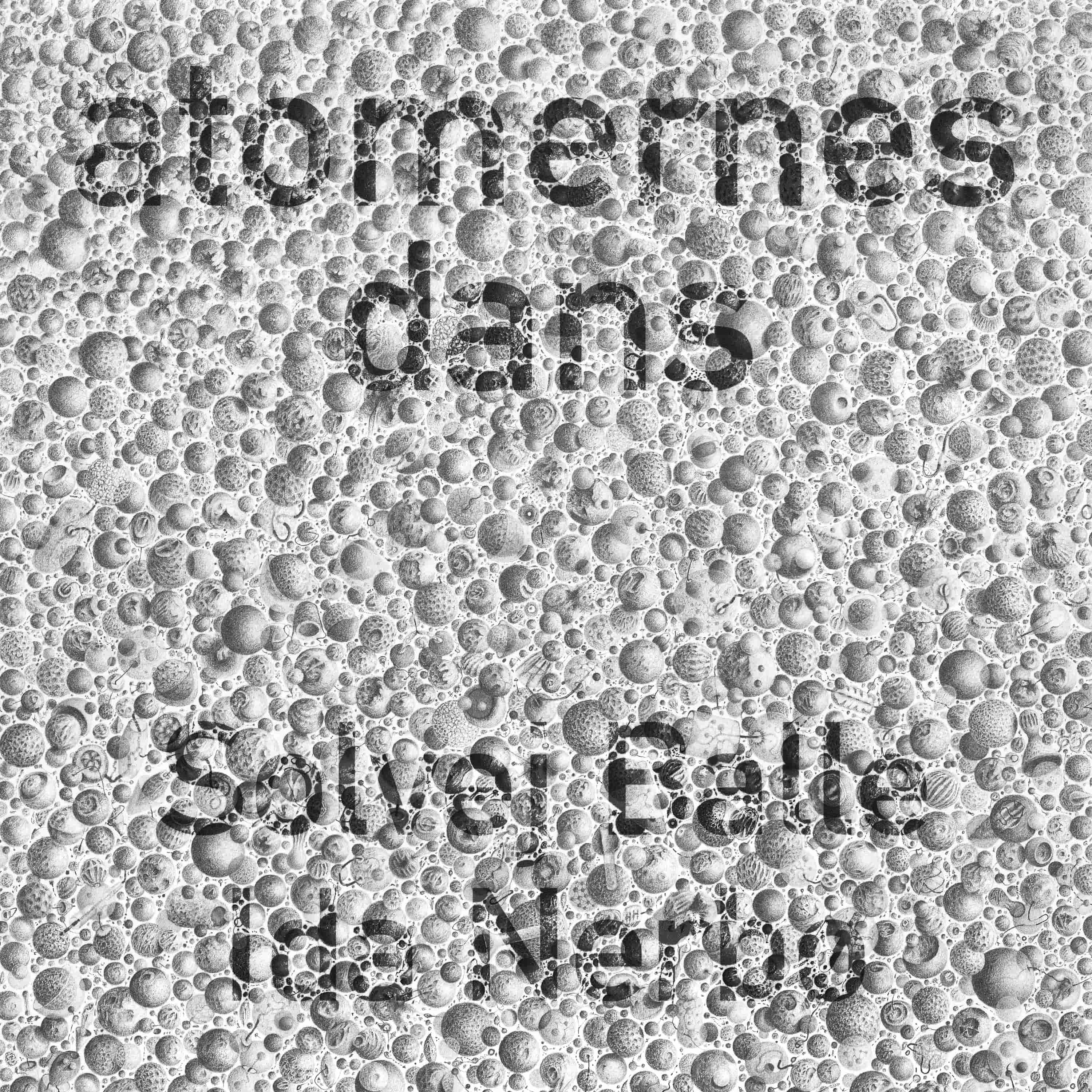
Poetisk Podcast #14: Atomernes dans (Dance of the Atoms)
Ever since I heard about the substance of thought, I have had difficulty finding a way amongst the many objects that block the movement of thought. Molecules, ions, atoms. Synapses, fluids, neurons. Not that free thought has become impossible, but difficult, an obstacle course.
Nordic Council Literature Prizewinner Solvej Balle’s hypnotic text Or set in the future through Ida Nerbø’s soundtrack. Curiosity and wonder. The continuous and the punctuated – out into a new sphere. Intense, beautiful, and relentless. (Outside of her sound design work Ida mostly known for her DJ and Techno productions.)
Atomernes dans is the last of five productions in the series Poetic Podcast Sends 2050, where the invited poets were given five titles to choose from as points of inspiration: CIRKUS 3000, and Lytteposten, the first two in the series, dealt with the title ‘Thing/Nothing’. Kære mor, the fourth, and AFTER-TIME, the third, relate to ‘A Solar Wind in One’s Hair’, and Atomernes dans to… ‘The Dance of the Atoms’.
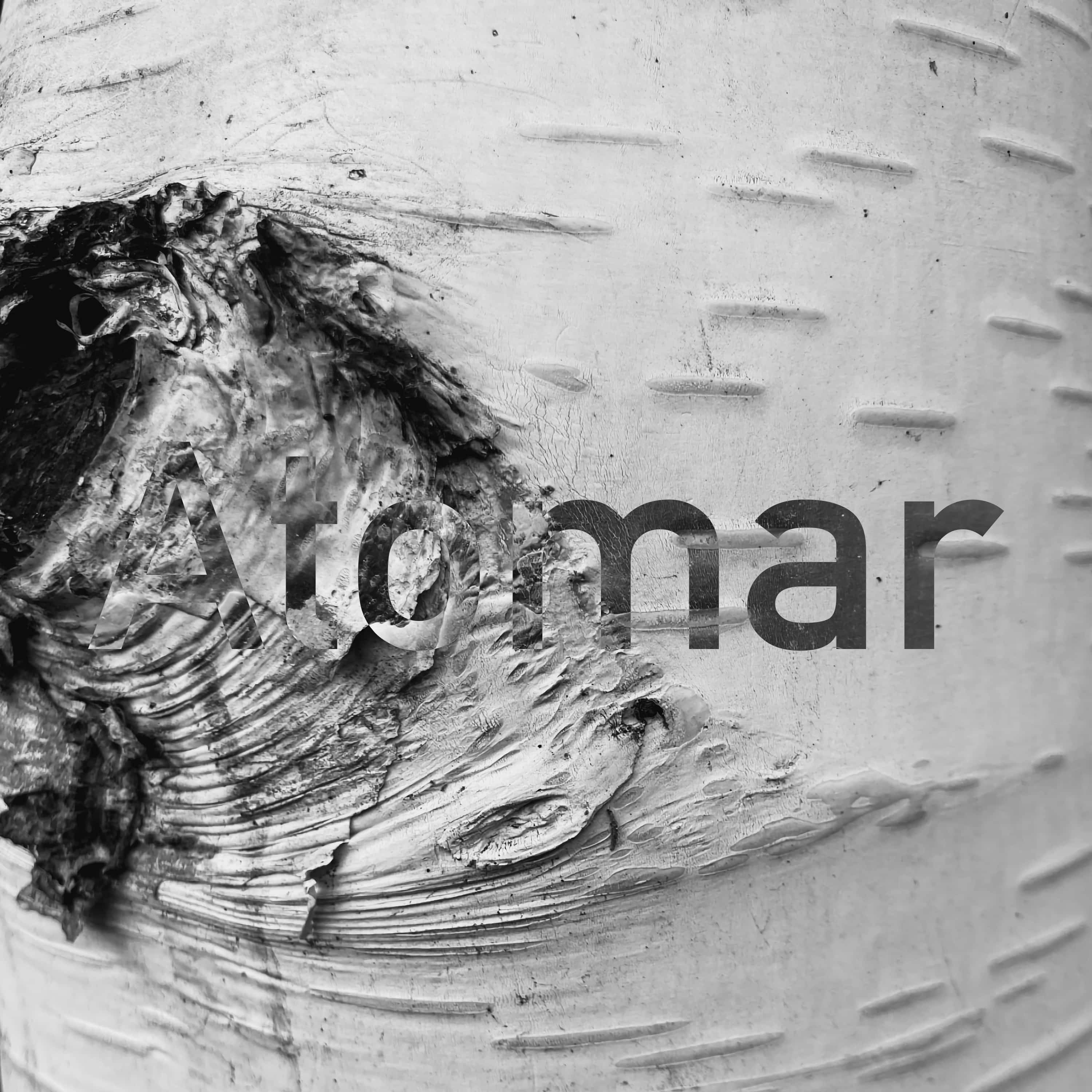
Poetisk Podcast #13: Atomar (Atomic Scars)
Atomar is based around a collection of 40 poems by Lene Henningsen, read aloud by Marina Bouras and Jens Albinus, with sound and music by yours truly.
One of Lene’s initial images for the collection was in terms of form:
I saw pages with spread, splintered words before me, with countless variations of spaces and pauses between the statements of the words, images, “melody lines”.
Later she wrote that:
Atomar starts from a present, a real lived present, and visions break out from that present in attempts at change, expansion, movement. The eruptions are violent, atomic. There is cultural criticism, but also the desire to remember the beautiful, the deeply culture-bearing. There is in the microcosm a sadness over the difficulty or impossibility of relationships, and in the macrocosm sadness over something similar; the impossibility of peace and care of the planet.
Between desperation and hope, the atoms continuously burst and form both their and our space, time, and future. And on the souls and bodies that live through it all, are the theatre of it all, atomic scars remain; in the poems fleetingly shaped like parts of a letter, the perhaps tiny empty space between two words, or touched by a breath after a comma –
It’s all in Danish, but an English translation of the poems (which might provide a good companion to following the podcast episodes) has been published and I’ve made a number of short videos with English captions for some of the poems.
Poetisk Podcast #12: Kære mor (Dear Mom)
Dear Mom, 2050
I’m recording this for you again in the hope that
you will wake up one day
then I’ll tell you everything
you can move in
here with us
I cleaned up for you
the house is as it was when they fetched you
Every day I think about calling you
I forget that you aren’t here
a little further down the road
lives a man whose wife
has also been fetched
Kære mor is a letter, to Mom, recorded in 2050.
The letter gradually records the contours of how the world looks and feels.
Text (Danish): Nanna Storr-Hansen.
Voice, interpretation & sound effects: Birgitte Lundtoft & Mia Edelgart.
Kære mor was the fourth in the series Poetic Podcast Sends 2050, where the invited poets were given five titles as points of inspiration. Kære mor relates to the title ‘A Solar Wind in One’s Hair’.
Poetisk Podcast #11: EFTERTIDEN
EFTERTIDEN (AFTER-TIME/POSTERITY) is a musical universe with a lyrical voice as its centre. The words speak of being alone, of overcoming and surviving, of cold, winter coats, of snow, of the beauty of ashes, of getting through crises. The music hovers around the words, whispering and bubbling, at once distant and near, warm and cool. In passages it resonates with and shares the same space as the words, in others it withdraws and leaves the words in their own space, trying to remember something that seems forgotten.
Niels Frank rewrote his poetry collection “Små guder” (Small gods) (2008) for the podcast, and Rosanna Lorenzen composed the music.
The podcast was the third out of five productions in the series Poetic Podcast Sends 2050, where the poets were given five titles as points of inspiration. CIRKUS 3000 and Lytteposten, the first two in the series, dealt with the title ‘Thing/Nothing’. EFTERTIDEN relates to ‘A Solar Wind in One’s Hair’.