rss

Modular Diary – 027

A week ago I wrote about (circular) mechanical sequencers and a lost post that I’d seen on a (re)construction of one for modular use. I still haven’t found the post, but in my searches for material on linear FM yesterday did come across this circular cardboard sequencer. There’s a fun video in addition the post on how to build it.

And that reminded me of some funny little bits tacked onto the end of some episodes of Reply All. Here’s one, and here’s another.

Modular Diary – 026

I particularly enjoyed the Cuckoo overview of FM principles that I came across in the Audulus forum thread on AM/FM/PM modulation.

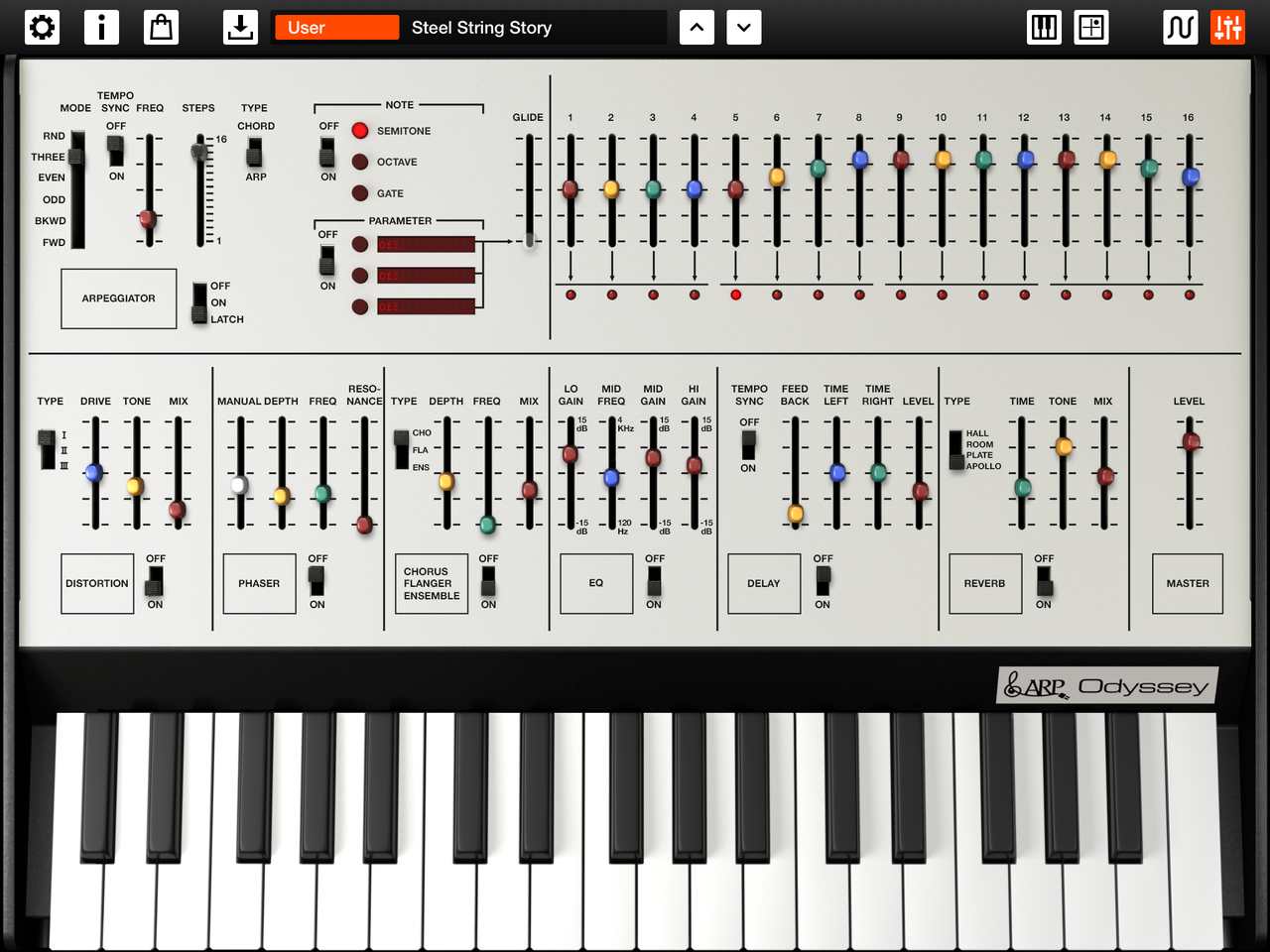
I’ve since been wanting to take a closer look at the difference between linear and exponential frequency modulation and came across this video (also featuring an old ARP Oddysey Mk I) by Synthesizer Keith.

There’s a follow-up Reddit thread also clarifying that it’s linear modulation at play in the Yamaha DX style FM – the phase type of frequency modulation that Cuckoo refers to in his video – as well as a similar thread at KVR.

Keith refers to the Yamaha style linear FM as being “more musical” in his video, and there’s a Reddit thread, leading to a Muff Wiggler thread, on that question as well.

I found it interesting to look through the Wikipedia entry on Frequency modulation synthesis. I always associate FM with the 80s (the DX7!) but as the article points out Yamaha was already developing (and patenting) it (after famously licensing it from John Chowning1 ) in the mid 70s. It was only in 1980 that they’d developed the technology to a degree stable enough to release it commercially in the form of the curious Yamaha GS-1.

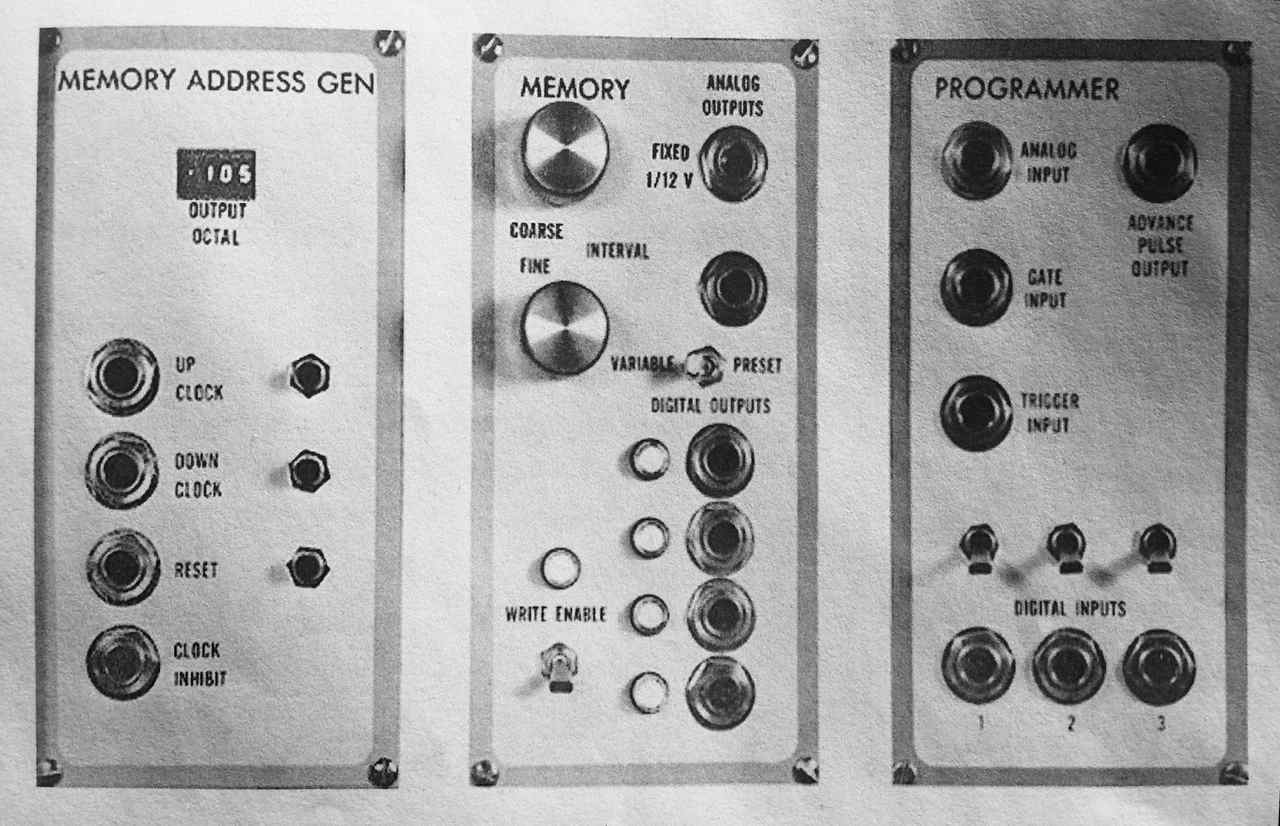
All of which was preceeded by Buchla with his own developments and implementations in the mid-60s.

  1. Chowning patented the digital implementation of FM in 1975. ↩

Modular Diary – 025

I went back and listened to the tryouts of the self-made TTSH that Jesper Pedersen posted on SoundCloud a while ago.1 (The Two Thousand Six Hundred is an unusual DIY clone of the ARP 2600.)

It’s interesting to think that while preceeding it by a year, the modular 2600’s production run is more or less parallel to that of the Oddysey. It’s a very particular sound those ARP instruments have!

In contrast to the punch of the first sequencer tryout that Jesper posted there’s also a warm drone and a more mellow sequence with some nice intonation and modulation details that appear as it progresses.


  1. “I began building hardware to take a little pause from software” he comments in the comments. ↩

Modular Diary – 024

Scratch the measurements from the last two days. I’ve been puzzled by the frequency readings I’ve gotten in Audulus – made using the Mic (External Input) 1 and ZeroCross nodes. (Calculating the deviations in cents was also done in with a little patch using the Audulus Hz2o (Hz to octave) module.)

I found a little tuner app that displays deviations in cents nice and clearly, and tried making some measurements with it directly via my iPhone’s microphone. I could set the ODDYSEi master tuning back to 440 and have the frequency register as a perfectly tuned A4 on the app – which is what one whould expect. The ODDYSEi Equal tuning matches equal temperament perfectly according to the tuner – which makes sense, also aurally! It turns out that Analogue tuning is calibrated to a near perfect A3 (220Hz) and gradually gets sharper as one moves up over the next 3 octaves. Inversely, moving down gradually gets flatter.

ARP ODDYSEi Analog tuning deviations in cents over 6 octaves:

A1 A2 A3 A4 A5 A6
A -39 -30 -1.2 4.8 10.6 16.5
A# -32 -7 -0.7 5.2 11.4 17.1
B -29 -12 0.2 5.6 12 17.6
C -15 22 0.5 6.2 12.4 18.2
C# -47 -19 0.9 6.9 12.9 18.8
D -44 -14 1.2 7.2 13.3 19.3
D# -19 -6 1.7 7.9 13.8 19.1
E -40 -5 2.4 8.4 14.3 20.4
F -30 -4 2.8 8.8 14.9 20.8
F# -10 -3 3 9.2 15.4 21.3
G -7 -2 3.8 9.8 15.8 21.5
G# -17 -2 4.2 10.2 16.1 22.1

(The measurements for the lower 2 octaves fluctuated a lot and were therefore more tricky to notate precisely.)


  1. Feeding the ARP ODDYSEi in via AudioBus. ↩

Modular Diary – 023

Here are yesterday’s measurements of the ARP ODDYSEi Equal and Analog tunings with the deviations from equal temperament indicated in cents.

ARP Equal (cents) 12-T.E.T (cents) ARP Analog
A 440 - 440 4 441
A# 466 - 466 7 468
B 494 - 494 7 496
C 524 2 523 9 526
C# 555 2 554 8 557
D 588 2 587 11 591
D# 624 5 622 10 626
E 661 5 659 12 664
F 700 4 698 14 704
F# 743 7 740 14 746
G 787 7 784 17 792
G# 835 9 830 19 840
A 884 8 880 20 890

Modular Diary – 022

Here’s a quick comparison of the differences between the Equal and Analog tunings on the ARP ODDYSEi – and how they compare to strict equal temperament. I’ve only measured one octave up from A = 440 Hz and am curious to measure how the tuning behaves in the other octaves as well. Interestingly I had to set the master tuning to 437.6 Hz on the ARP in order to get a measurement of 440 in Audulus. And the analyzer in MC Studio is showing pitches roughly 4 Hz below the equal measurements taken with Audulus. I’m not sure what’s going on there. Something to look into.

Equal Temp. ARP Equal ARP Analog
A  440 440 441
A# 466 466 468
B 494 494 496
C 523 524 526
D# 554 555 557
D 587 588 591
D# 622 624 626
E 659 661 664
F 698 700 704
F# 740 743 746
G 784 787 792
G# 831 835 840
A 880 884 890

The next step is to calculate the deviations in cents.

Modular Diary – 021

I‘ve been taking a look at putting together a quantizer for custom tunings in Audulus – there’s been a little activity on that front in the forum. I have in mind something that builds on the small ratio modules that I was using to tune a sequencer in a previous post. Something very flexible that can be changed on the fly with the possibility of additional ‘hand-tuned’ deviations from the basic ratios. A kind of hybrid between systematic and empirical tuning.

Since it’s taking me a little time to figure it all out here’s a little experiment with changing the tuning on the ARP ODYSSEi from Equal to Analog while running a simple sequence. The deviations are subtle but nevertheless quite noticeable (often a little flat in relation to equal temperament) – at some point it could be interesting to measure them precisely and put together a little list that could be used in other contexts.1

Here’s the unadorned sequence – two cycles in equal temperament followed by two with the analogue tuning:

ARP Equal Analogue

And a longer jam trying out the analogue tuning at different transpositions as well as playing with the length of the sequence.

ARP ODYSSEi Analogue Sequence

  1. See, again the Richard D. James interview with Tatsuja Takahashi. ↩

Modular Diary – 020

I was watching a video of Lars Lundehave Hansen’s Lunar Eclipse and got to thinking of mechanical sequencers (to take a step even further back than the analogue ones). I seem to remember seeing a post about someone constructing an electro-mechanical sequencer with control voltages so that it could be used in a modular set-up. I unfortunately haven’t been able to find my way back to that post, but remember it as being based on a circular switch similar to the one found on the 1959 Wurlitzer Side Man. It also go me thinking of the Polyphons that inspired the sound-sculpture that Ida Raselli presented in a recent Frankenstein’s Lab. Finnish sound artist Martin Bircher used a similiar Symphonion as the basis for a hand-cranked MIDI sequencer.

In a way it’s surprising that circular forms aren’t more common in sequencer design. There’s the Buchla 250e (that Benge used in his tour of sequencing modular systems) or iOS apps like Patterning or dot Melody. I can’t think of much else.

Modular Diary – 019

As I mentioned a few days ago I was intrigued to find out about the the EM-u modular sequencer on Darwin Grosse’s Art + Music + Technology podcast, but had a hard time finding more information on it. Digging through Benge’s blog I discovered that he too had difficulties gathering information on the workings of this device. I also came across the picture above, some more videos, and an entry with a detailed explanation of setting up a 32 step sequence on it.

Modular Diary – 018

In the liner notes to 20 Sytems Benge explains his initial aim of ‘letting the instruments speak for themselves’:

The original idea for 20 systems was to set these machines running and hear what they could do with no personal input at all. But none of these machines are capable of working on their own: a certain amount of input has been necessary to create something musical with them.

The balance between setting up generative situations and interacting with them.

Each track on 20 Systems was intended as a presentation of the ‘pure sound of the individual instrument’. Benge has since embarked on a series of albums each focussed
on a single synthesizer system. I’ve been listening to two of them lately, at first enjoying the clean abstraction of Abstraxa, created using the Buchla Electronic Music Box, and now slowly coming to consider the two long Serge tracks of Forms 6 – Works on Paper to be something of a masterpiece.