↬ Twenty-six – 07: Failures, Sequences
Hi, I’m Rudiger Meyer, and this is my monthly newsletter covering what I’ve been up to and what’s been catching my attention.

* * *
It’s summer, and the floor in our apartment had reached a point where it urgently needed sanding and re-varnishing, which has meant vacation time filled with a lot of sorting, cleaning and rearranging furniture.
Sophie Calle deals with another kind of cleaning out / cleaning up in her Catalogue Raisonné of the Unfinished:
When my life ends what should become of the ideas that never became anything, that waited for their moment in drawers and boxes? Before I disappear, I decided to make an overview of drafts, attempts, and abandoned projects. To give life to my intentions. To complete the uncompleted.
I’ve sometimes wondered what I should do with the ‘Worklist’ on my website. ‘Worklist’ sounds somewhat pretentious. Would ‘Archive’ be a better title, leaving space for items that are more like a scrapbook of materials? Or perhaps even with some kind of tag or star rating. Three stars for a piece that I feel somehow holds up, stands the test of time. Two stars for something that had potential, but didn’t quite get there. One star for pieces that simply didn’t work out.
Along one of my typography wanderings, I came across a site “Where type designers sell fonts in progress” with version history progress bars for the different aspects. The kerning is not finished on this one, different weights still planned for that one. This one, complete. That got me thinking of something similar for compositions, which often go through various iterations: “The instrumentation not quite successful in this one, even though the form is basically in place. To be improved in an upcoming version.”
Something else that resonated with me, regarding Sophie Calle, was her activity in various directions – writing, photography… not mastering these mediums in their own right, but finding a way ahead in her personal combination of them. A way out of this ‘double failure’ as she puts it.
I’ve often wondered if I’ve spread myself too thin over the years – should have dedicated myself more to a single thing (à la Schoenberg and Cage), but somehow haven’t been able to help myself. Couldn’t resist the pull of different interests, and have made peace with that. A feature, not a bug.
I also got to see the Lucien Freud exhibition that’s now also on at Louisiana. Now there’s someone that was single-minded! As the intensity of his portraits attests to.

* * *
Following a seed that someone planted on the Audulus Forum, I ended up putting together a version of the Klee Sequencer in Audulus. Since it builds around a shift register, it was an easy step to take the shift-register core that I’d used in my Hordijk Rungler and Shift-Register Sequencer as a starting point. From there, everything flowed fairly easily, with some YouTube videos (a fun one, and a practical one) and a user manual PDF as reference points.
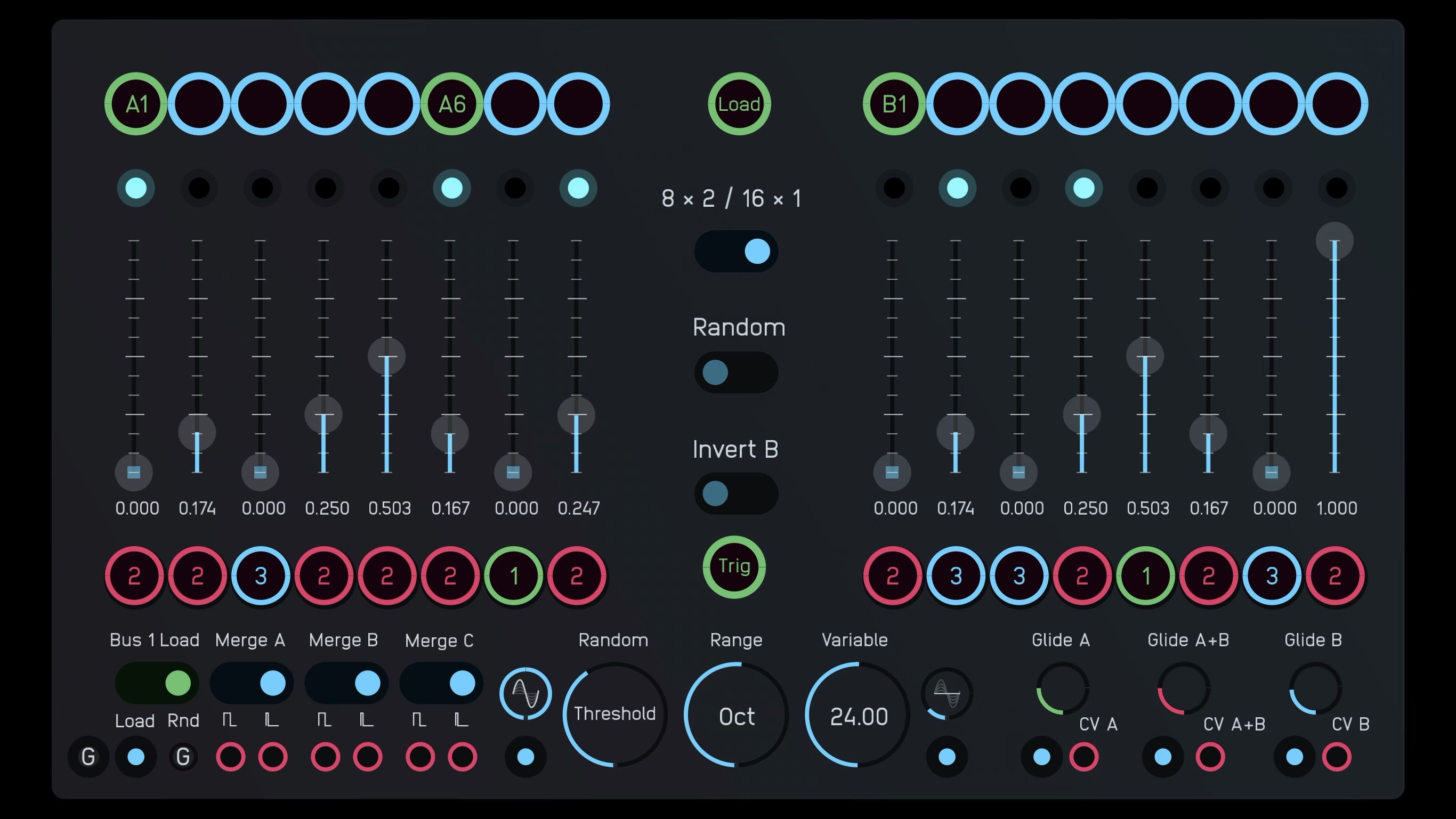
Scott Stites’ history on how it all began (The Birth of the Klee Sequencer) is fortunately still available on the web, and provides an interesting peek into the myriad of small decisions that gradually led to the sequencer taking the form it eventually did, even though there remain numerous versions of it in various formats.
The shift register was originally a way of packing information in serial form, with the possibility unpacking it simultaneously, going back to early computer history, and it’s fascinating to see how this simple device continues to find so many musical applications.
Hordijk uses it as the core of his Rungler, as does Moritz Klein in his DIY sequencer, which I in turn used as a starting point for my own Shift-Register Sequencer. Scott Stites, while primarily developing his sequencer on breadboards, mentions the early Nord Modular virtual version of the Klee sequencer. Hordijk was a very active part of that community (his first shift-register experiments going back to the 80s), and it’s interesting to speculate on just how much cross-pollination was taking place.
* * *
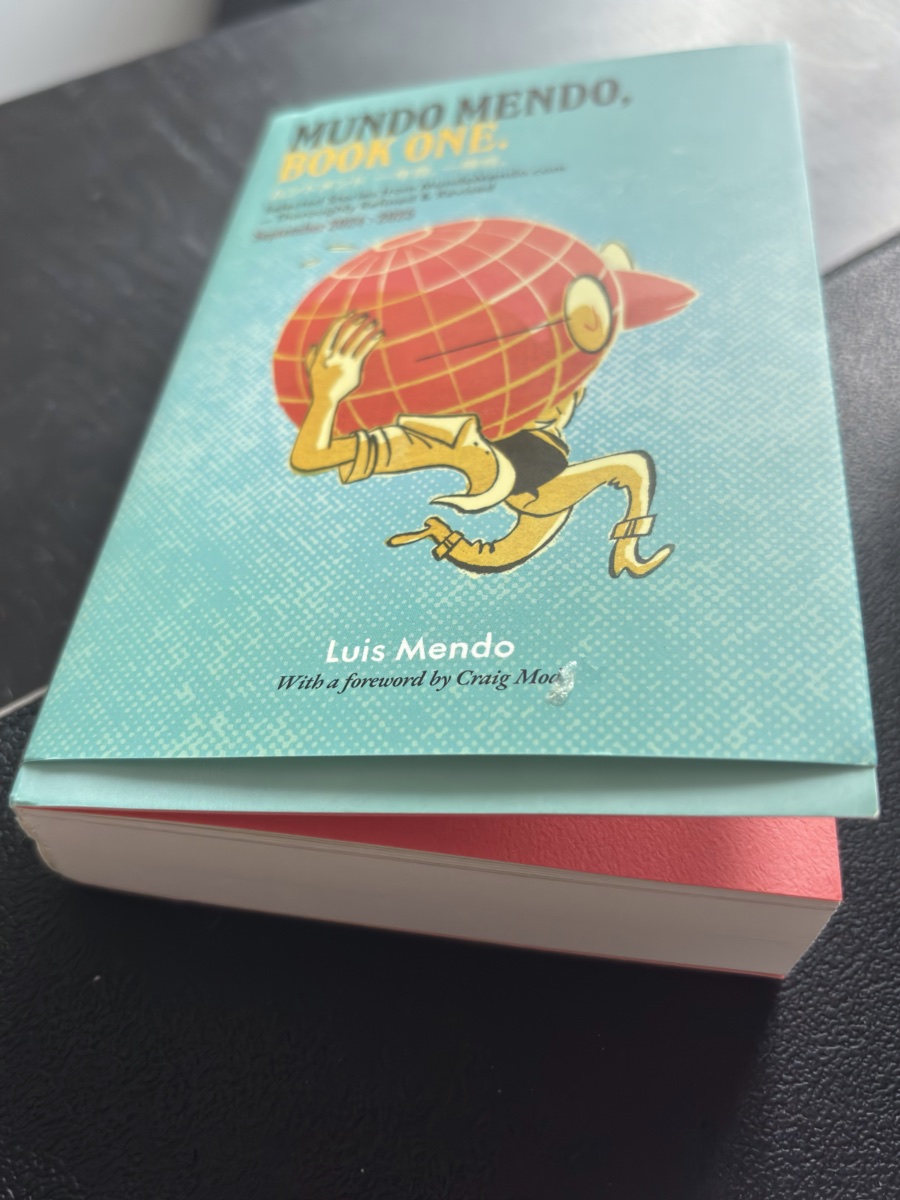
Luis Mendo’s Mundo Mendo, Book One arrived in the post a few weeks ago, and it’s been a delightful item to have on my desk, something to dip into for small bites of distraction away from the screen. I enjoyed his transformation of audio waveforms into characters, for example.
* * *
And continuing on a lighter note: Yello’s Around the Sun has been a fun summer-holiday track. At first I found it a bit cheesy, my thoughts pulled to Laid Back’s Sunshine Reggae. But it turns out to have greater depth and charm. There’s a tinge of British (Punk/Dub) in Dieter Meier’s shouts, a connection that I hadn’t made before, but more is obvious in their albums from the early 80s. His vocals are also an example of (non-autotuned) singing hitting just the right amount of bend, a good offset against the slickness of the backing. Nice to see them still doing their thing after all these years. The video with footage from Cuba in happier times, some forty years ago.
All the best,
↬ Rudiger